
Dupes & Premiumization
Aluminum For All – Dupes, Democratization and Status Signifiers
In the 1920s, Rimowa started experimenting with aluminum for suitcase manufacture, inspired by the early days of aviation. The modernity and resilience of the shiny finish made it an icon which Rimowa riffed on and refined for over a century. The material itself communicated premium quality because it was rare, expensive to manufacture and strongly associated with a single brand, now part of the LVMH Group.
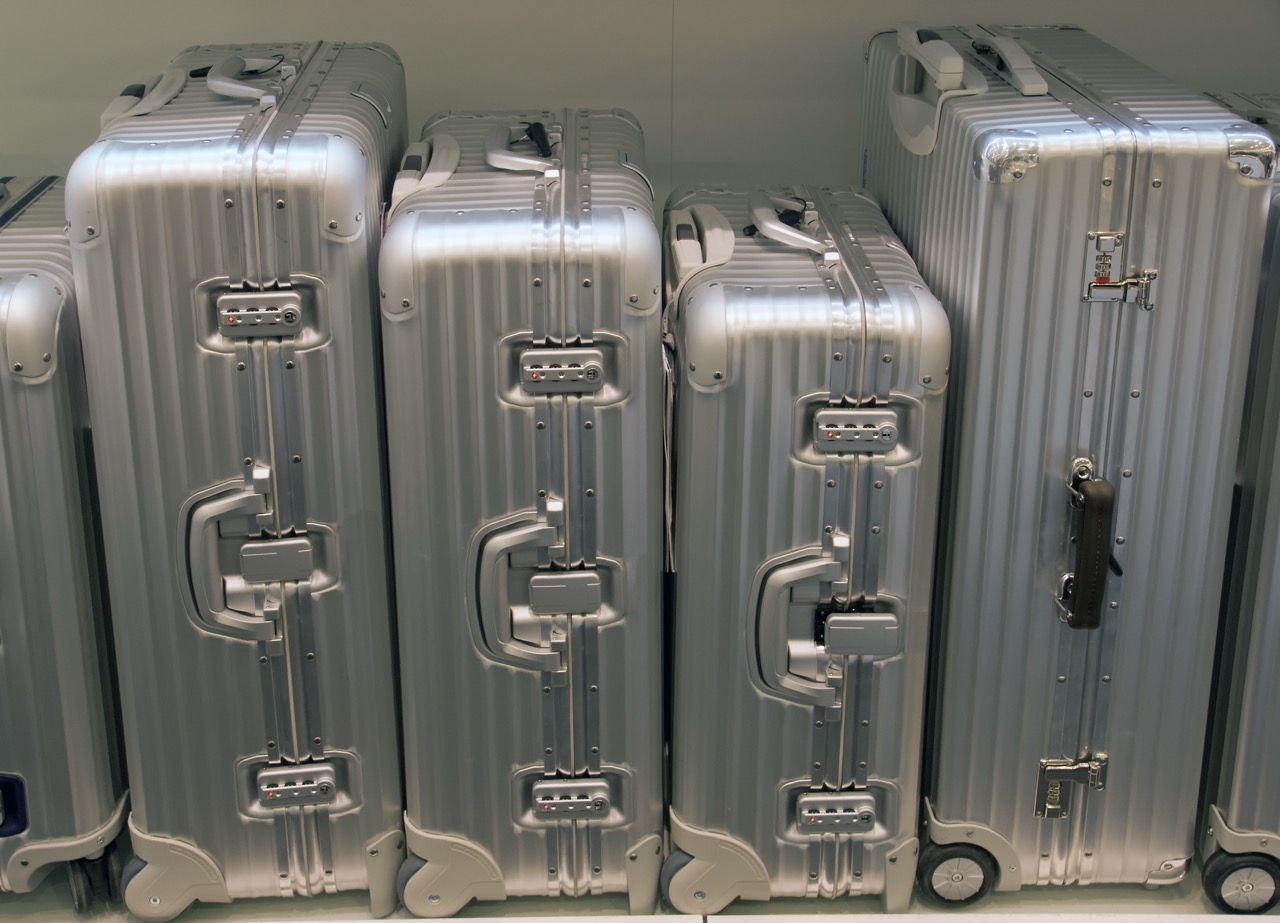
Today:
- Aluminum cases exist from Amazon brands and at High Street retailers for under £150.
- Mid-market players offer aluminum at £300–500.
- Premium brands still sell at £1,000+.
The material has become democratized. Consumers are increasingly weighing up how willing they are to pay a premium for an aluminum case, now that pricing architecture offers a similar product at multiple accessible price points.
By the way, this isn’t just happening in luggage, but across many categories - for example in cashmere, beauty products or noise-cancelling headphones.
As premium attributes become accessible, brands must shift from selling features to selling meaning and story.
If we look at the case of Rimowa, the material is the table stakes – what they’re selling is heritage, associations with luxury travel, repairability, patina and character acquired over time as proof of authenticity and craftsmanship. In short – status signaling where the luggage becomes a social object beyond a useful tool.
The explosion of dupe culture
Three forces converged to truly catapult dupe culture to the level of acceptance that it inhabits nowadays.
Social media made discovery frictionless, when phrases like "Rimowa dupe", "Stanley dupe", "Lululemon dupe" became normalized on platforms like TikTok.

In the endless scroll on social media, consumers no longer discover products through brands, instead pausing over aesthetics, functions and viral recommendations on their FYP before following through on a friction-free purchase. Brand can be part of the hype, sure, but often plays a more secondary role than it used to.
Faced with inflation and rising costs of living, consumers became much more willing to explore whether they were more motivated by the object or the logo (brand) on it.
The normalization of dupe culture means that even affluent consumers increasingly mix luxury items with budget basics, rather than being loyal to a specific price tier.
Overall, dupes have become socially acceptable and consumers view buying dupes as evidence of being economically savvy and informed, rather than compromising on quality by buying a copy.
Where consumers happily buy dupes
Generally, consumers are comfortable buying dupes where the purchase is primarily functional or aesthetic rather than symbolic. In these categories, consumers tend to focus on outcomes rather than origins.
Le Creuset-inspired cookware, designer furniture lookalikes and supermarket own-brand kitchen ranges continue to thrive because consumers care more about appearance and utility than provenance. If a pan cooks well and looks good on the hob, the visual signifier and logo become less critical.

Beauty is perhaps the strongest example of all. Consumers routinely substitute premium brands such as Charlotte Tilbury, Drunk Elephant and Sol de Janeiro for lower-cost alternatives that promise a similar experience. In many cases, the functional outcome feels close enough that the premium becomes difficult to justify. TikTok's countless "save versus splurge" comparisons have only accelerated this trend.
Increasingly, luggage finds itself in a similar position. For many travelers, it’s about nailing the basics: whether the wheels roll smoothly, the zip closes securely and the case survives the journey. If a £250 aluminum case delivers those outcomes, many consumers struggle to see why they should spend four times as much.
This presents a challenge for premium luggage brands, as materials, features and manufacturing techniques become more widely available. Leisure travelers and occasional travelers are more likely to view luggage as a utility purchase and therefore be receptive to dupes.
Where consumers still want the original
The categories where consumers continue to value originals are equally revealing it is where ownership itself creates value.
Luxury handbags remain one of the clearest examples. A counterfeit Birkin does not deliver the same social meaning as an authentic Hermès Birkin. The craftsmanship matters, but so does the exclusivity, the waiting list, the story and the cultural cachet. In many respects, authenticity is the product.
The same principle applies to watches. Buyers of Rolex, Patek Philippe and Audemars Piguet are not purchasing a way to tell the time, when they can do that perfectly already on their mobile phones. They are buying status, scarcity, craftsmanship and increasingly, an asset that may hold or increase its value. A dupe or collab can undermine much of what makes the original desirable, for example, if you look at the recent Swatch Audemars Piguet pile-on.

Collectibles provide another example. Whether vintage luggage, limited-edition sneakers, Pokémon cards or art, ownership history often contributes directly to value. In these markets, provenance is not an added benefit; it is part of the product itself.
The distinction is important because it reveals that consumers are not necessarily rejecting premium products. Rather, they are becoming more selective about where authenticity matters and where functionality is enough.
The rise of "masstige"
Between luxury and budget, there’s a growing middle ground that many brands are actively targeting.
Sometimes described as "masstige" - prestige made more accessible - this segment appeals to consumers who want quality, design and a sense of aspiration without paying true luxury prices. Luggage brands like Away, July, Monos, Antler and Carl Friedrik have successfully positioned themselves in this space. They offer elevated design, strong storytelling and premium features, while remaining significantly more affordable than the top tier luxury brands.
Their proposition is compelling because it addresses a question many consumers are inwardly asking themselves how to tap into the experience without the luxury price tag.
For many shoppers, the answer is no longer to trade down to the cheapest option, but to trade across to a brand that feels premium enough.
This is where pricing architecture becomes increasingly important.
What luggage can teach us about pricing architecture
Historically, luggage sat within relatively clear pricing tiers. Budget products occupied the entry level, mid-market brands sat comfortably in the middle, premium products commanded a meaningful uplift and luxury brands operated in a category of their own.
Today those distinctions are becoming harder to maintain.
Consumers can buy polycarbonate cases at virtually every price point. Aluminum is no longer so exclusive. Smooth-rolling wheels, integrated locks and premium-looking finishes have become widely available.
The result is a phenomenon often described as price compression. As product features become more similar, consumers become less willing to pay dramatically different prices for apparently similar outcomes.
This does not mean premium brands are doomed: it means that they must communicate louder on dimensions like distinctiveness, service and emotional value, rather than differentiation in features, a crowded space in which it is harder to stand out.
The strongest premium brands increasingly sell identity rather than functionality. They are selling what ownership says about the consumer and how that ownership makes them feel.
The future of premiumization
Perhaps the most interesting aspect of dupe culture is that it does not necessarily weaken premium brands. In many ways, it forces them to become clearer about what they offer, both in the purchase moment and in the years to come.
When aluminum luggage was rare, consumers paid for aluminum, despite the price.
Now that aluminum is available at almost every price point, consumers must decide whether they are paying for craftsmanship, heritage, service, status and emotional connection - or simply for the shiny material.
In a world where materials, features and even aesthetics can be replicated at every price point, lasting premium value comes from something harder to imitate: heritage, authenticity and the stories consumers tell themselves about ownership. The challenge is no longer avoiding comparison with a dupe but giving people a compelling reason to pay a premium for the original.