
The Complete Guide to TSA Locks
The Complete Guide to TSA Locks
What Is a TSA Lock
Every Travel Sentry approved lock uses a dual-access mechanism: the owner opens it with their own combination or key, while an authorized security agent can open the same lock with a standardized tool issued only to screening authorities.
If a bag needs to be inspected preflight and the passenger is not present, for example, before the bag is loaded into the hold, security officers can access the luggage without cutting or breaking the lock. The bag can then be securely re-locked and continue its journey with the original lock intact. A TSA lock is a licensed lock design, identified by the Travel Sentry Red Diamond mark.
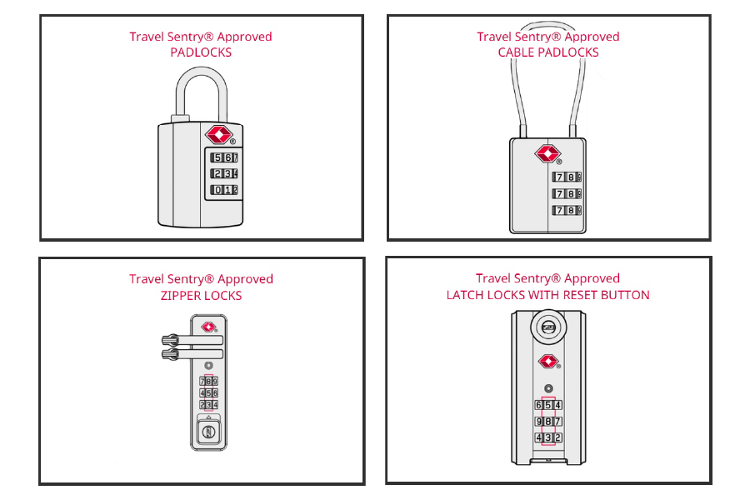
For any luggage line with a non-TSA lock, if checked luggage needs to be searched after screening, security agents are authorized to cut open any lock they can't open and the resulting damage is not something a screening authority compensates for. Using a licensed Travel Sentry approved lock shifts that risk away from the end customer and away from your brand. It reduces returns and complaints tied to damaged locks after screening.
How Is a Travel Sentry TSA Lock Used at Airport Security?
Checked bags are scanned and any flagged for concerns, such as suspected weapons or lithium batteries, may be pulled for a manual inspection. If that inspection happens without the owner present, screening staff use a standardized tool to open a Travel Sentry approved lock and relock it afterwards, without cutting it. A non-compliant lock doesn't offer that option: agents can cut it open and it therefore is not relocked before the bag continues its journey, leaving belongings vulnerable. Travel Sentry supplies these opening tools to security and customs agencies in over 1000 airports at no cost. Over 50% of all travelers fly from an airport where the system is already implemented.
Added Value for Consumers
The same system that protects your brand also shapes how travelers view your product. A bag with a Travel Sentry approved lock can be opened, inspected and relocked by security without damage, meaning fewer travelers arrive at baggage claim to a cut lock or a bag that never got relocked. That reliability is part of why consumers respond to the Red Diamond mark: it signals a smoother, less stressful travel experience.
Benefits of Using a TSA Accepted Lock
Brands that use licensed Travel Sentry approved/TSA accepted locks get access to a lot of benefits:
- Premium positioning: a Travel Sentry-commissioned survey found that 74% of consumers attribute positive values to the Red Diamond mark, and 68% would pay more to have it on their product (Attest, 5,000 respondents across the US, UK, France, and Germany, Q1 2024)
- Verified build quality: Travel Sentry approved locks are produced by licensed manufacturers under strictly controlled conditions. Each design goes through rigorous standards for security, functionality, and quality, including key cuts and cylinders
- Free marketing support: licensed partners can access hang tags, lock-setting instructions and point-of-sale materials in multiple languages at no cost, alongside promotional opportunities across regions and platforms
- Smoother travel experience: products carrying a recognized, licensed lock tend to move through security processes with fewer complications
- Network access: licensing connects a brand with Travel Sentry's global network of over 600 licensed lock and luggage manufacturers, with guidance from Travel Sentry's team to help find the right production partner
The license itself carries no fee. It requires meeting Travel Sentry's branding guidelines and submitting a simple quarterly report on lock quantities and suppliers, not sales data.
What Does Consumer Research Say About Lock Usage?
In 2025, Travel Sentry commissioned a global study with Intelligencer (2500 respondents across US, UK, France, Germany and China) to do with traveler attitudes toward luggage security and a few findings were directly relevant to product decisions. Theft risk, not just convenience, drives locking behavior: the top reason travelers lock is to minimize theft risk if a bag is temporarily lost or delayed (45%), closely followed by wanting to keep the bag from opening and spilling its contents in transit (41%).
Another Travel Sentry-commissioned survey (Attest, 5,000 respondents across the US, UK, France, and Germany, 2024) found quality and durability rank among consumers' top purchase factors for luggage generally, reinforcing the case for well-tested lock hardware, whichever format a product line uses.
Full consumer research reports are available to licensees, please contact your Regional Manager.
Types of Travel Sentry TSA Locks
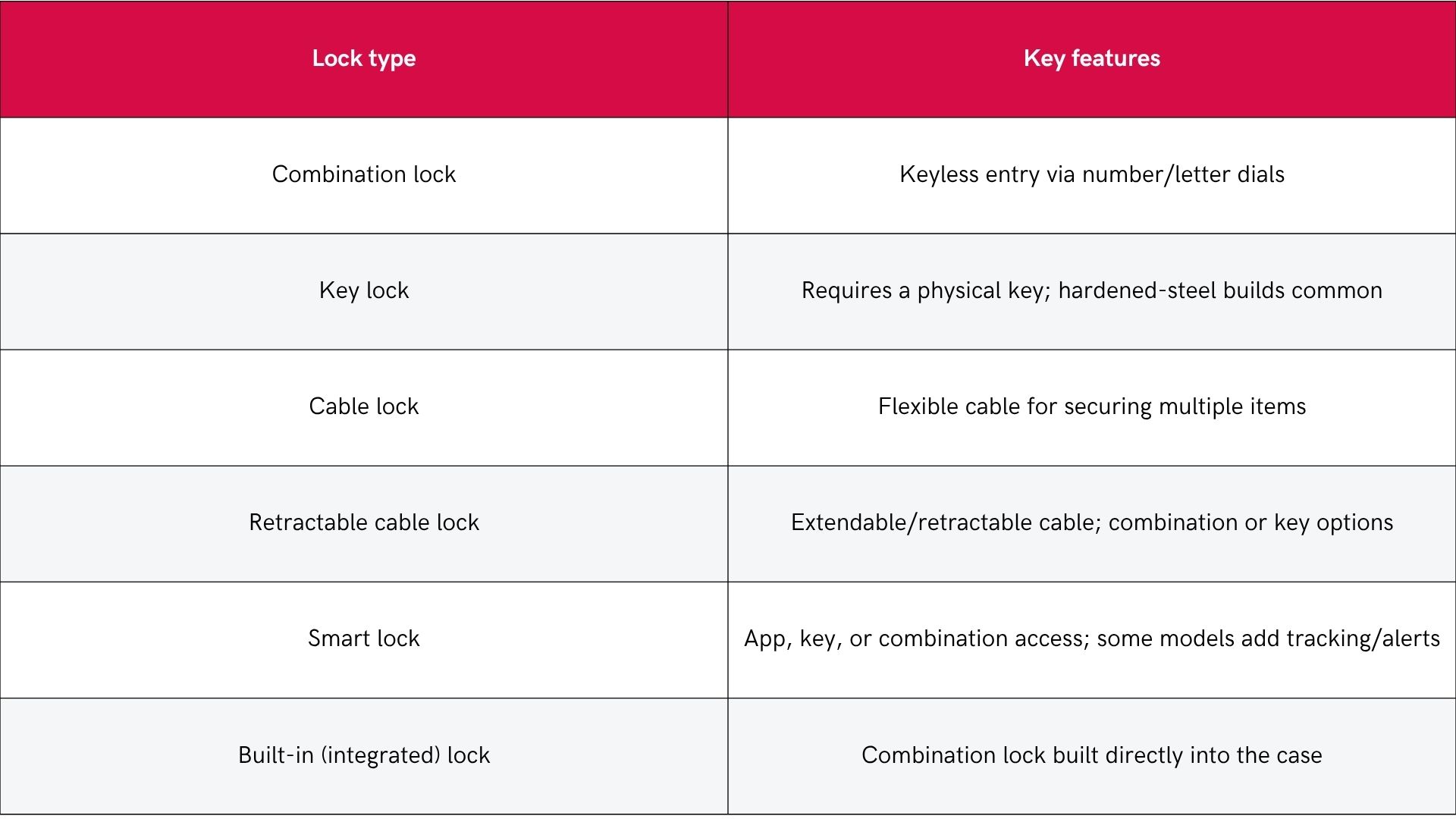
Sourcing teams can choose from a few lock formats. Each works with the same dual-access mechanism, so the decision comes down to product fit:
Looking for a factory that already works with licensed Travel Sentry hardware? Browse our vetted supplier directory to compare luggage manufacturers and find the right fit for your sourcing needs.
Frequently Asked Questions
Do all luggage suppliers offer Travel Sentry TSA locks?
No. Only manufacturers licensed by Travel Sentry can legally produce and mark locks with the red diamond. Buyers should confirm license status rather than assume it from a lock's appearance.
Is a Travel Sentry TSA lock required by law for checked luggage?
No, locking checked luggage at all is optional. A Travel Sentry TSA lock is a way to lock a bag without risking that security agents cut it open during a physical inspection.
Can a Travel Sentry TSA lock be added to an existing luggage design?
Combination padlocks and cable locks can usually be added as an aftermarket accessory. Integrated locks generally need to be specified before tooling, since they're built into the case structure.
Does a Travel Sentry TSA lock work outside the United States?
Yes. The Travel Sentry system is used in 850 airports in over 80 countries.